April 4th, 2011
He knew they would kill him. He stayed anyway.

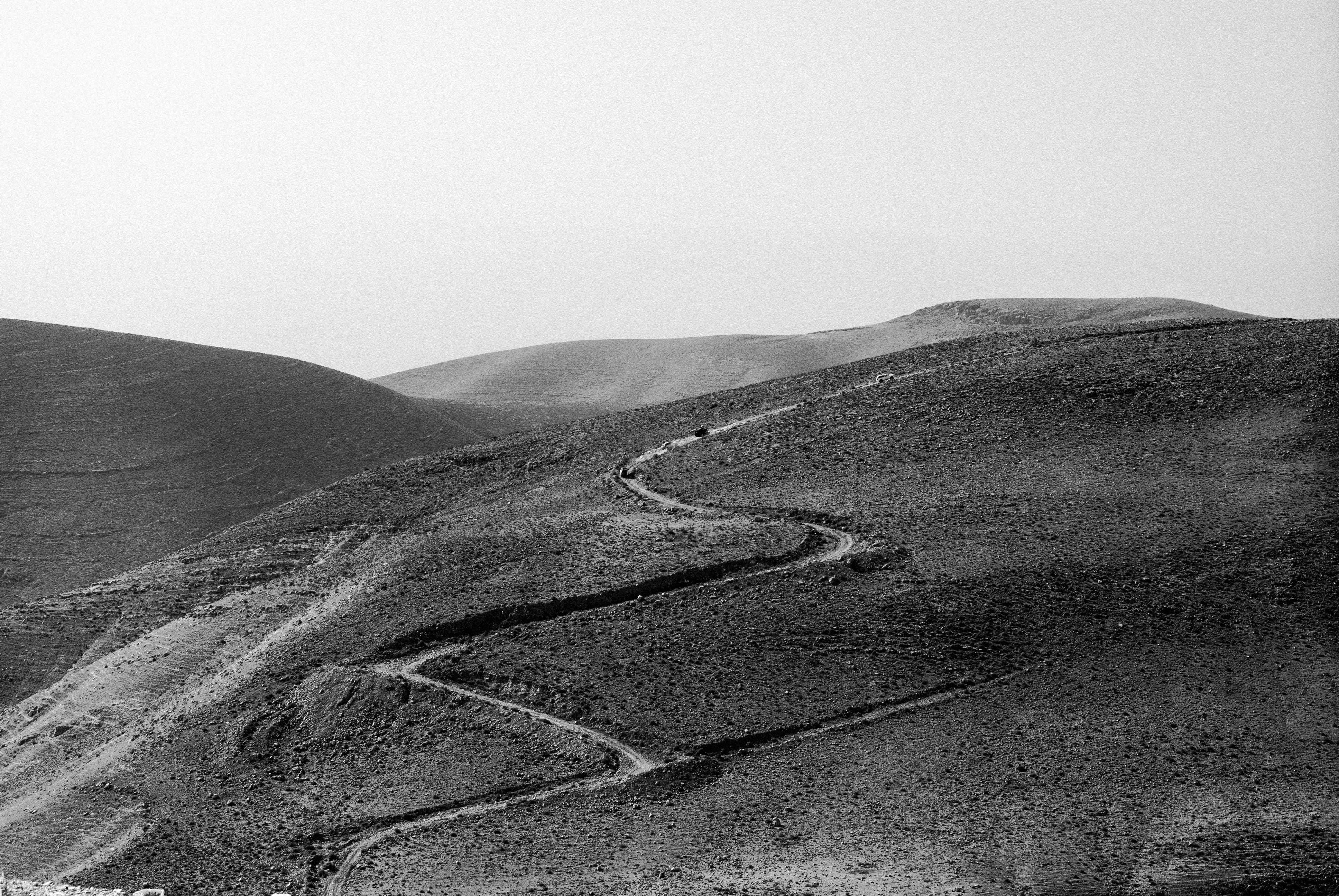
As we came down the hill, we heard the sirens, and about half an hour later, we got the news that Juliano Mer-Khamis had been shot, five times, in his car on his way to the theater, his son sitting between his legs.
Of course, there had been threats. Even the project I was in Jenin for had received anonymous letters calling for everyone to leave, or else… In January, when I had been away in Warsaw, chasing a broken heart in the diffuse lights of smoke-filled bars, someone had thrown a Molotov cocktail into the lower window of our guest house. When I returned in February, the dark spots on the wall looked like a painting. The next couple of weeks, a patrol car from the Palestinian Authority kept watch outside our guest house; when I got up late in the night, rain pouring down on the February West Bank hills, through the curtains I could see them out there in their jeep, a small light in the dark, the howling of the street dogs in the distance.
I was most definitely lost at the time, and Jenin had felt like the best place to hide from the realities of my own life. I had spent my time there working with local kids during the day and sleeping on makeshift mattresses on the rooftop of our guest house at night, listening to music that would blend in with the night prayer echoing through the valley. If not on the roof, we slept eight per room, smoked cigarettes in our bunk beds, and sometimes went over to the old cinema — the cinema we were there to rebuild — and watch old movies on the big screen, just for ourselves. Unluckily for me, I had fallen in love with a girl named B. during one of these September nights. I remember taking a photograph, her face resting in her right hand, two dark eyes looking out at the lights in the distance, that shimmering contour of rolling hills. It’s easy to fall in love when you’re lost and far away from home.
It must have been shortly after I’d taken that photograph when I heard Juliano’s name for the first time. It was hard to miss. One of these early days, when my head was still dizzy from the overwhelming bustle of this town, I stopped by his Freedom Theater in the Jenin camp. Jenin was a divided town, as I learned pretty quickly: here, the bustling city center, there, the refugee camp from 1967, where people lived so densely close to one another. I had seen images of how the Israeli army had driven into the camp with tanks during the second intifada, and as I passed the arch at its entry, I remembered seeing a video of someone getting shot in that very place.
Juliano ran the Freedom Theater. When you stopped by the place, you could almost always hear his deep, harsh but sympathetic voice in the air, leading some acting workshop for children or rehearsing a new play with older kids. He had the commanding voice of an army officer, but in that harshness lay a warmth that provided comfort instead of an order. He was clearly probing you to get out of your skin, to make you uncomfortable, to make you take the plunge — but it was for your own good, you’d realize.


The threats to us, that we brushed off with some sarcasm, had a lot more substance for Juliano, and he knew it. I heard his low voice often ruminate on what he called “double oppression.” The kids jumping around the theater, I realized, really faced that: the Israeli-Palestinian conflict on the one side, but also the strict bounds of their fathers and mothers on the other — a two-layered prison for their bodies and minds, and Juliano’s theater was here to free them from both. He never looked around his back, but it was obvious there were people in this town waiting for his fall. I discovered a video where he predicts his own death, an eerily accurate description.
In a way, he had inherited the courage of his late mother, Arna, whose face I soon saw flickering on the big screen. That night, I had taken B. over to the empty cinema, and we watched Juliano’s documentary, “Arna’s Children.” As I tried to hold onto her hand in the dark, I saw Arna build a theater in the ruins of Jenin; I heard her yell and challenge kids in the same manner her son did now. I saw the faces of those young boys struggling to find an expression for their anger. During the second intifada, some of them had become fighters, some had become suicide bombers; but one face stuck with me particularly: Zakaria Zubeidi, who would go on to lead the Al-Aqsa Martyr Brigades in the battle of Jenin, and whose face had been burned by an explosion. He had been one of those shooting salvos of machine gun fire at Israeli tanks.
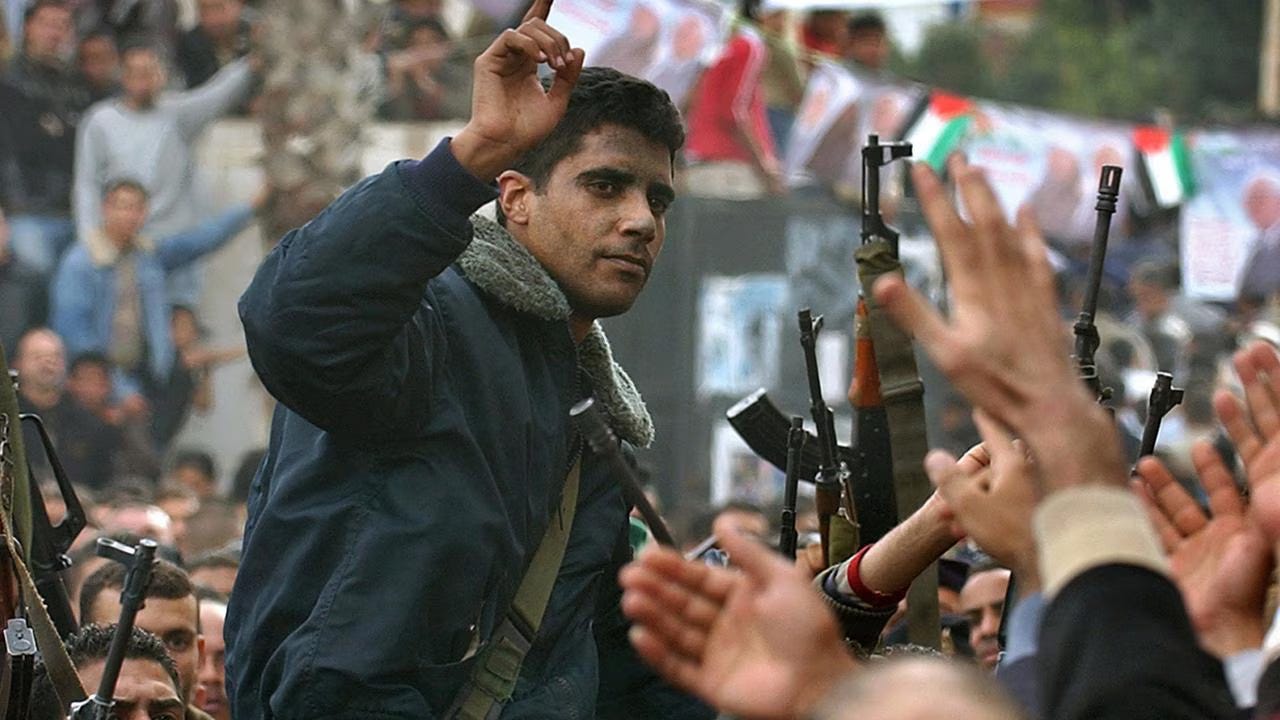
A couple of days after that cinema evening, B. slipped me a note under the door of the men’s sleeping room. I learned two things from that note: that she was good at writing poems, and that there was another lover, someone she had just met that summer, and she wasn’t going to betray her feelings. To churn my circling thoughts, I started long walks around town, the camp, the hills. On a couple of these walks, I had seen Zakaria Zubeidi, often in the camp, close to the theater. He’d sometimes carry a weapon that seemed slightly too large for his body, and despite the violence written in his face, his eyes were soft and melancholic, and I had caught myself thinking that if he hadn’t picked up that rifle, he might have picked up a pen and written poems instead.
I remembered that we spent the days after Juliano’s assassination close to the guest house, and someone suggested it might have been Zakaria after all who killed Juliano. That notion was — of course — quickly dismissed, but it is a thought that has stuck with me over the years, not because I think it’s true, but it tells me how little I understood of this town, of its politics and violence, after all.
I knew we had to go when more threats emerged after his death. Spring was about to arrive in the West Bank, filling that dried-out land with a wash of green; I remember driving to Ramallah in a small van, breathing in the mild air from the window, and feeling so alive that it hurt. If I’m honest, the fear that my own refuge from the world soon had to end was more threatening to me than the letters we frequently received in the guest house.
Over the years after Jenin, Juliano had become a theme in my life I would revisit, if ever so infrequently. In those ambiguous years after my return, his picture hung on the wall of my cramped student apartment. I remember coming in from smoking in the dim backyard, at night or late morning, and looking at his picture for a moment. It was hard to adapt to the reality of life, after all that had happened — not because it was necessarily bad or traumatizing, but it was so bluntly direct and alive. Anything in these couple of years after Jenin felt like a softened version of life; as if the taupe bricks of this part of town were not entirely real, and didn’t fully count.
I eventually found a direction in my life, a foothold to step on, and with it came a new sense of security. I moved into a new flat with my girlfriend, and without a second thought, the picture of Juliano moved to the cellar. As I built a somewhat stable life through the coming years, I only followed news from Jenin infrequently, read about how his former students pushed for justice, staging protest marches in Ramallah, holding up images of Juliano reading “Who Shot Me?” I read how Zakaria escaped an Israeli high-security prison by digging a tunnel, how he was caught again, and eventually freed in a prisoner deal. I saw his profile appear in the New York Times, a couple of months after my son was born.
Eventually, I stopped reading, just as I stopped thinking about B. In fact, we saw each other not long ago, in Berlin. It was a nice and casual conversation, one that many old acquaintances could have had. On my way back, I realized that I had forgotten where I had put that image of her, the one that was always so dear to me: she, looking into the distance, head resting in her hand, that same melancholy as Zakaria Zubeidi in her eyes. I didn’t mind, I realized now, if I lost it after all.
These days, I get up around 7am. I’m usually one of the first people in the library, where I spend my days writing, watching the cherry tree outside the window turn color through the seasons. Sometime last year, I picked up the habit of stopping by the Jesuit church across the street. I can’t say much about what it did to me, but I feel that when I sit down on the wooden bench and close my eyes, I can feel a deep hum that carries me through any hardship. When I heard about the Israeli army invading and destroying the Jenin camp in the aftermath of October 7th, I realized that I hadn’t thought of that place in a very long time.
Only once a year, around the fourth of April, I think about the sirens, and I think about how they carried Juliano’s coffin across the checkpoint in Jalame, in between barbed wire fences and soldiers with their M16s, shouting that god is greater than anything. I remember how we all formed a convoy, and how the metallic voice of Zakaria Zubeidi rang through a megaphone at the graveyard as he called in from Jenin, in praise of a man who had tried to fight two battles at once, and lost.
And sometimes I think about that video where Juliano predicts his death. I watched it again the other day. His demeanor is jokey — one might even find it cocky — but when you look closely, the gaze in his eyes is vulnerable, a silent sadness. I can see that he had fully understood the imminence of what he was saying; that he, as opposed to me, had entirely understood the logic of hate, love, and death in Jenin — and that he loved these people so much that he even forgave that they’d eventually kill him.
Sitting in church yesterday, the mild April light shining in through the upper windows, I caught myself thinking: Give me that kind of love and conviction of this man, and I should never ask for anything again.